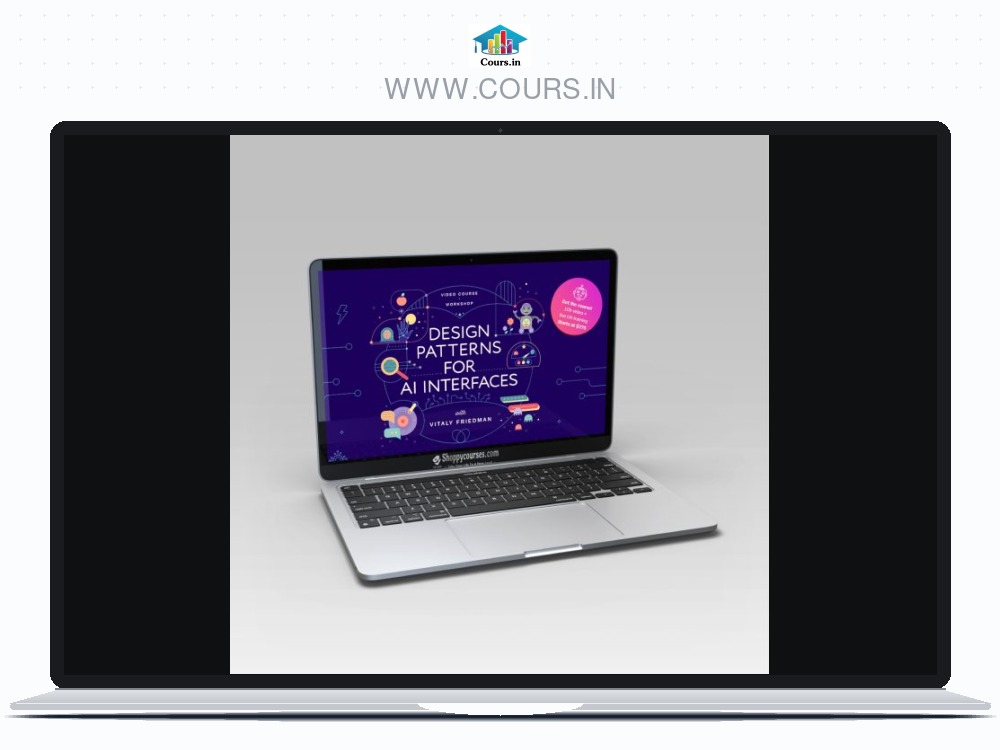


Sale Page: https://ai-design-patterns.com/
Most AI products fail for a simple reason:
- They work technically… but fail experientially
- Confusing interfaces
- Generic outputs
- Frustrating interactions
- Low user retention
- The issue isn’t the AI.
- It’s the design of the interaction
Design Patterns For AI Interfaces is built to solve that by teaching how to design AI-powered products that feel intuitive, transparent, and actually usable.
Instead of focusing on prompts or tools, this program focuses on:
- How humans interact with AI systems
- The Core Idea: AI UX Is Not Chat — It’s a System
Most AI interfaces today rely on:
- Chatboxes
- Prompt inputs
- Linear conversations
- But this model breaks quickly.
Users experience:
- High effort (typing prompts repeatedly)
- Low clarity (uncertain outputs)
- Poor control
Modern AI UX requires:
Structured interaction systems, not just conversations
The course highlights how traditional chatbot patterns are often slow, generic, and frustrating for users The Problem: AI Features Have Low Adoption
Many companies launch AI features that:
- Users try once… then abandon
- Feel unreliable or unclear
- Don’t integrate into workflows
This happens because:
AI is added as a feature — not designed as an experience
The training addresses this gap directly.
The Shift: From Prompting → Guiding User Intent
A key concept in the course is:
Users shouldn’t struggle to “figure out” the AI
Instead, the interface should:
- Help users express intent
- Reduce input friction
- Guide decision-making
This includes:
- Structured inputs
- Presets and templates
- Visual workflows
- From UI Designer → AI Experience Architect
A key transformation inside this program is mindset.
Instead of:
Designing screens
You begin to:
- Design systems
- Shape interactions
- Guide human-AI collaboration
- Where This Course Has the Most Impact
Design Patterns For AI Interfaces is especially relevant for:
- Product designers
- UX/UI designers
- AI builders & startups
- SaaS teams integrating AI features
It’s less about using AI tools… and more about:
Designing AI experiences that people actually adopt