
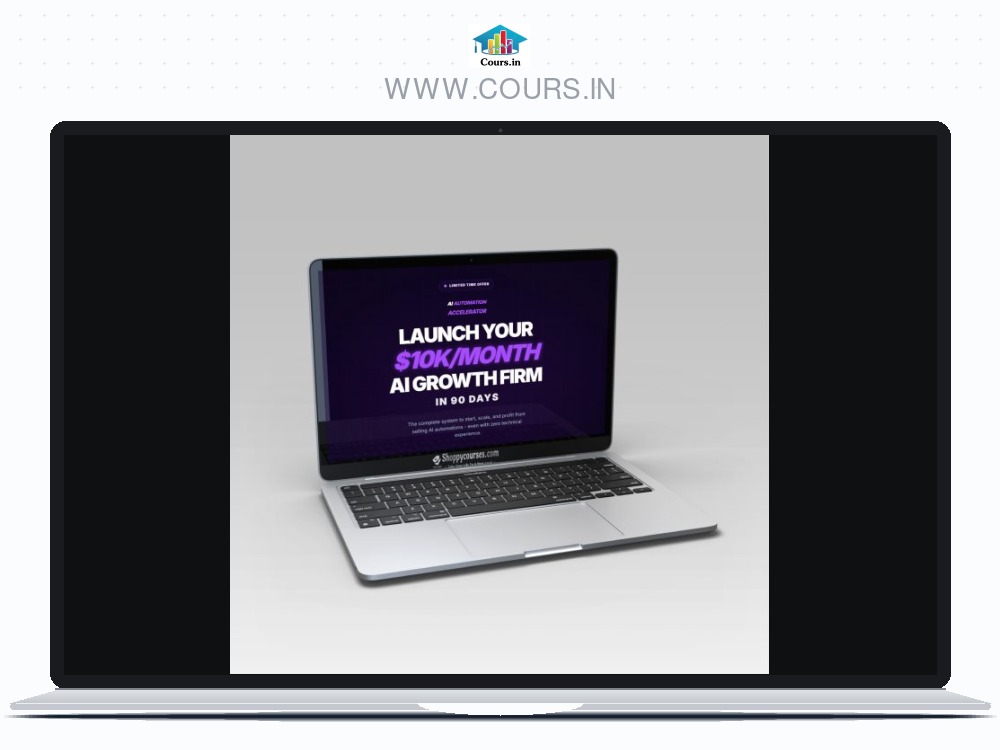


Sale Page: https://accelerator.hamzaautomates.com/
AI Automation Accelerator is a training program focused on building automated systems using modern artificial intelligence tools.
The course explores how entrepreneurs, developers, and digital professionals can combine AI services with workflow automation to reduce manual work and increase operational efficiency.
Rather than focusing on individual tools alone, the accelerator examines how automated processes can be designed as complete systems that handle tasks such as data processing, communication, content creation, and business operations.
Foundations of AI Automation
Automation powered by AI has become an important component of modern digital infrastructure.
Inside, participants explore the underlying principles that allow artificial intelligence tools to perform complex workflows automatically.
Core ideas discussed in Hamza Automates – AI Automation Accelerator include:
- Understanding the basics of AI-powered automation
- Designing workflows that connect multiple tools together
- Reducing repetitive manual tasks through automated systems
- Structuring automation pipelines for reliability and efficiency
- Integrating AI into everyday business processes
These concepts help learners understand how automation can support scalable digital operations.
Connecting AI Tools Into Workflows
A central theme of the course is the ability to combine different software platforms into coordinated automation systems.
Instead of working with isolated tools, participants examine how integrations can allow tasks to flow automatically between applications.
Examples of automation structures explored in Hamza Automates – AI Automation Accelerator may include:
- Trigger-based automation sequences
- Data processing pipelines powered by AI
- Automated messaging and customer interactions
- Workflow integrations between business tools
- Task scheduling and system monitoring
These integrations allow businesses to operate more efficiently with minimal manual intervention.
AI Systems for Business Operations
Automation is increasingly used to streamline operational processes within digital businesses.
The accelerator explores how AI-driven systems can support various areas of business activity.
Operational use cases discussed in the program may include:
- Automating repetitive administrative tasks
- Handling inbound customer inquiries with AI tools
- Processing data for analytics and reporting
- Generating marketing or communication content automatically
These applications demonstrate how AI automation can contribute to productivity and scalability.
Building Scalable Automation Infrastructure
One advantage of automation systems is their ability to scale once properly designed.
AI Automation Accelerator highlights how well-structured workflows can handle growing workloads without requiring proportional increases in manual labor.
Scalability concepts discussed in Hamza Automates – AI Automation Accelerator may include:
- Designing workflows that operate reliably at larger volumes
- Monitoring automation systems for performance and accuracy
- Expanding automation across multiple departments or projects
- Creating repeatable frameworks for future automation tasks
These strategies support long-term efficiency improvements in digital environments.
Who AI Automation Accelerator May Be Useful For
It may appeal to individuals exploring the intersection of artificial intelligence and workflow automation, including:
- Entrepreneurs building automated online businesses
- Developers interested in AI-powered workflows
- Digital marketers automating marketing processes
- Operations professionals optimizing internal systems
- Professionals exploring modern productivity tools
The course focuses on practical frameworks that can be adapted to many digital business contexts.


